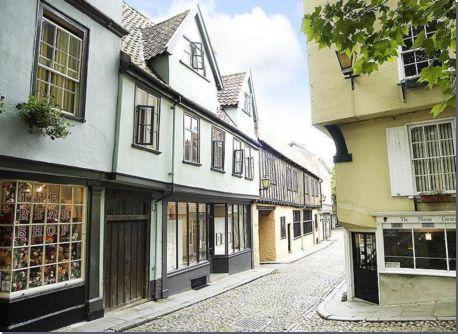
My own picture of the police at the G8 protest, London, April 2009. The shock of the middle classes when the police fail to show respect. I had to use all my 'schoolmarm' powers on a police officer to escape the 'kettle tactics'. The orders were clearly based on a fear of a much more aggressive demonstration than was actually happening.
Event this week.
Dr Karl Posso
Department of Spanish, Portuguese and Latin American StudiesUniversity of Manchester
Suspended Animation: Affect and Affection in Tropicalist Brazil
This paper will examine the central function of the affective image and object in a
selection of works by ‘Cinema Novo’ filmmaker Glauber Rocha (1939-1981) and the
neo-concrete artist Hélio Oiticica (1937-1980) produced during Brazil’s ‘Tropicalist’
period of cultural experimentation in the late 1960s. The concern with social and
political issues at the time of the military dictatorship led Rocha and Oiticica to
attempt to displace conventional knowledge and recognition in order to develop
artistic modes for intervening ethically in the world. Affection in their work becomes
less a question of what is represented – transcendent ideals – and more a case of
violent sensation, a means of interrupting action-reaction circuits: this shift towards
the affective suspension of representation, and of judgement, in/by their work, I
argue, functions as a timely event of ethical intensity.
A paper to be given on Thursday at Cambridge University, and which I would like to hear…
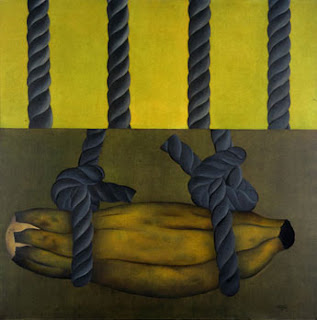
But I have 2 preliminary thoughts. One is that this particular combination of filmmaker and artist was featured at the Tate Modern in 2007, and one of my concerns then about the published work on Oiticica in particular was the arguement that as an artist he was a 'universalised' creative, and not influenced directly by thinking about the poverty problems around him until later in his career. He was not the only Brazilian in the late 1950s to change direction on this - and most important was the art critic, Ferreira Gullar, who had promoted Oiticica, but who became a poet, and went off to Recife to participate in Street Theatre and other direct action cultural work. But there was a French PHD student in Art History from Manchester University speaking at the Tate Modern seminar, who I hope has learned more about the sitituation in Brazil since then. Manchester has some good Brazilian academics in post. Oiticica's work is placed in the care of Texas University, which also has other Brazilian artists work. I am not sure it serves them well if it excludes the environment in which the work was created. Brazil needs this material in its own institutions.
The second point is that I feel by working from the artistic work, to the restrictive event (the didatura) to the change in focus as 'ethical' it ignores signs in the artistic production prior to 1964 - and Glauber Rocha was radical from the begining. My own work with the artistic influences on Joao Cabral de Melo Neto, who was critically interpreted as following an intellectual art appreciation of Miro - image - poem, rather than thinking what images and politics did Cabral instinctively use as a man from Recife, and place in his work. The phrase 'misleading ideas' is much more subtle when, even more than 'tropicalia', the idea of hiding radical truths about Brazilian society in learned cultural discourse of internationalised art is engaged. Of course Cabral had to be 'politically protected' in the Diplomatic Service. The colour idea is key - has Posso picked up on that I wonder. Well I don't mind if my own ideas turn out to be the same as everyone else. I am sure that as a professor, Karl will be much better able to express himself than I can.
I had another quotation that I have been keeping in reserve in thinking about aesthetics of poverty.
"..only what is repressed is symbolised; only what is repressed needs to be symbolised" .
This is apparently from Ernest Jones (1916) who was a contemporary of Freud in Vienna - I don't know the original source, this is in Freud for beginners (1979) p 173. I expect it relates to dreams, not politics.
One last Brazilian puzzle for today. The significance of the 'yellow mercedes' in Clarice Lispector's The hour of the star. Discuss in relation to the 'yellow mercedes' in Amarelo Mango.